
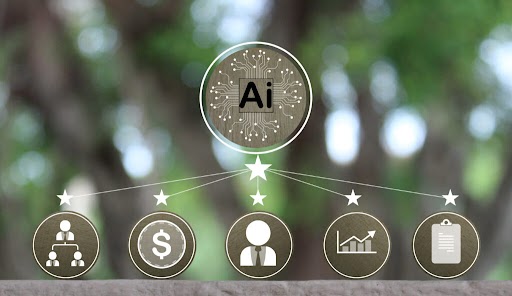
Supercharging People, Not Just AI
AI is everywhere, but value isn’t automatic. Many firms are piloting tools without the leadership, skills, and guardrails to turn experiments into outcomes—creating momentum but having gaps in P&L, trust, and capability. The pattern is consistent: employees are willing, adoption is rising, yet maturity lags because orchestration, governance, and re-designed work haven’t caught up. Treat this as a people-and-management challenge, not a tooling race. Equip your workforce with agency, clarity, and safe-to-try spaces—and AI begins to compound.
Where AI lifts performance most, leaders combine human judgment with machine leverage, redesign roles around the “human-in-the-loop,” and measure business outcomes, not feature usage. Randomized and quasi-experimental studies show sizable productivity gains in well-scoped tasks, especially for less-experienced workers—while poorly governed rollouts can flood organizations with low-quality output and friction. The takeaway: pair enablement with standards and you get speed with quality.
An executive playbook to unlock “super-agency”
Make AI literacy a leadership baseline. Every C-level owner should be fluent enough to ask hard questions about fit, risk, and ROI—and to sponsor pilots tied to real workflows.
Redesign jobs before buying tools. Map tasks by “automate/assist/augment/avoid,” keep humans on consequential decisions, and codify escalation paths.
Adopt Responsible-AI guardrails. Stand up policies for transparency, bias testing, incident response, and monitoring aligned to recognized risk frameworks.
Invest in skills where impact is provable. Prioritize training and change support for teams closest to repeatable, measurable work; build peer-coaching to spread know-how.
Measure outcomes, prune “workslop.” Track cycle time, defect rate, CSAT, and margin—then actively curb low-value, AI-generated content that dilutes signal.
What to watch on your dashboard
Adoption tied to uplift in KPIs.
Skills for priority workflows and manager readiness to coach human-AI collaboration.
Responsible-AI, identify issues, and remediation.
Bottom line: AI creates advantage when leaders expand human agency—clarity of purpose, redesigned roles, practical skills, and trustworthy guardrails. Start there, then scale.


